Having trouble with your purchase? Place your order by phone! Call now (905) 951-7825 or email at info@officialgamepuck.com
10 Oz Hockey Pucks
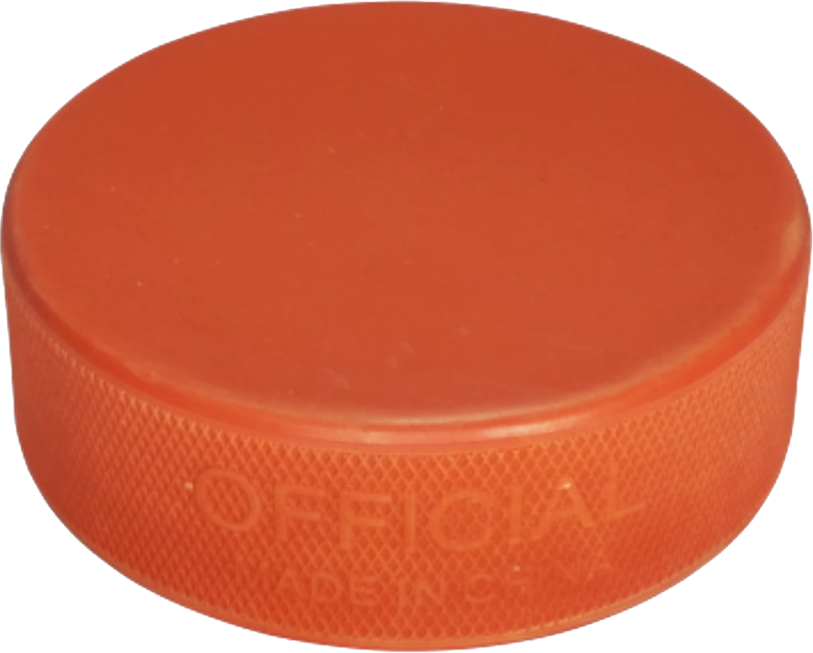
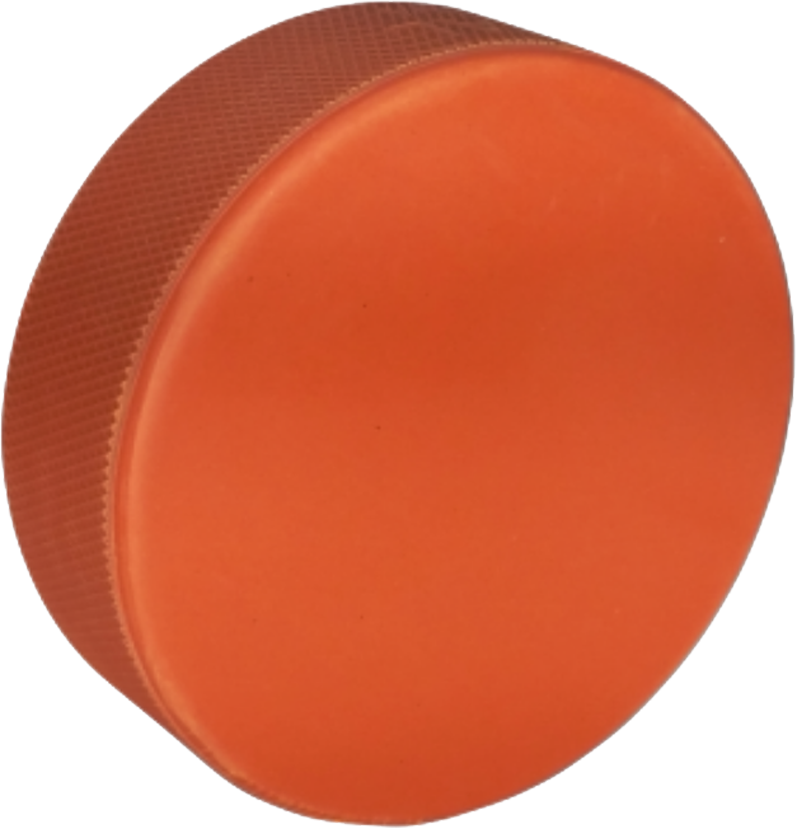
Made in Canada, this orange training puck adds resistance to build strength, making regular pucks feel lighter after practice.
Price
| Quantity | Price (CDN) | Price (US) |
| 1-50 | $3.49 | $2.69 |
| 51-999 | $3.49 | $2.68 |
| 1000-3999 | $3.42 | $2.63 |
| 4000+ | $3.35 | $2.58 |
Shipping
We ship internationally and locally via UPS, Fedex, Canada Post and various freight companies for larger orders. We select the most cost effective option available to us depending on weight, size and destination. Pick up is also available as is shipping via UPS or Fedex under your account rather than ours.
Product Details
The Heavy weight puck is made in Canada and is produced in the standard orange color meant to distinguish it from regular black pucks. The main purpose of this puck is for training. Using a heavy weight puck provides additional resistance when shooting and passing. After practicing with a heavy weight puck, it becomes easier to use a regular weight puck.
We do not manufacture hockey pucks and do not offer any warranty for puck wear due to game play. If you have questions about our sponge hockey pucks, call us.
Turnaround
Our turnaround is typically 21 days from the time we approve your artwork.
Rush Orders
Most orders can be turned around very quickly (24 hours if needed) if required. If it’s physically possible to do it for you, we’ll get it done. Typically, a 10% rush charge is applied to order required within 10 days and 20% rush charges apply to orders required within 4 working days. Have a rush order? Call (905) 951-7825 or email info@officialgamepuck.com
FAQ
What is the durability of the hockey pucks?
With the added stress on a Hockey puck today, it is not a big surprise that they do not last as long as they used to. All hockey pucks today are far more likely to chip or even break when used as compared to 20 years ago. So why don’t manufacturers just make their hockey pucks harder and more durable? There are two main reasons.
A harder puck is more difficult to shoot and pass. A puck is designed to have some give. It’s a simple matter of physics involving the transfer of energy between the hockey puck and the stick. A puck compresses when struck just like a golf ball. If it didn’t, the game would be very different. The hardness of a hockey puck is measured with a Durometer. It’s a basic impact test that measures the resistance of a plunger when it impacts a puck. There’s an acceptable range for a hockey puck and manufacturers have to stay within a set range.
The other factor is the rink glass. Glass breakage can be a major expense if it occurs too frequently. It can also disrupt a game while the glass is being replaced. While it is debatable how often the breakage of rink glass is the result of the puck (Typically the real cause is a small flaw in the glass that is struck just at the perfect spot or is the result of how the glass is installed.), the puck is something that gets pointed at as the cause. With players shooting much harder on average as compared to just a decade or two ago, the number of high speed impacts is much more frequent. Over the past 20 years, there seems to be a trend to manufacture hockey pucks that are slightly softer than they were in the past. The result of all this is all pucks seem to wear more quickly.
It is also worth noting that hockey pucks will get slightly harder over time. Oils are used in the manufacturing of a puck. Gradually, these oils will migrate to the surface and in most cases evaporate. If they migrate too quickly, an oily layer can form on a puck over time as these oils work their way to the surface. It’s a natural process and nothing to be concerned about. But if you have an old puck kicking around the hockey bag it may seem harder and more durable as a result. It may be. But it may not have been when initially made. So comparing old and new pucks isn’t an apples to apples comparison.
A few other things to note is that pucks are designed to be used frozen. Go to any professional or junior game and you’ll find that pucks are either taken out of a freezer or kept in an ice bucket prior to use. This is done to make the pucks a bit harder and less bouncy. In fact, NHL pucks are used for no more than 2-3 minutes on average before they are replaced. The warmer the puck, the softer it will be and the more likely it is to chip.
As a result of all this, we cannot warranty a puck for chipping or any other sort of damage once it hits the ice. How it’s used and under what conditions are beyond our control. Our approach is to offer you the widest choice possible of puck models and let you decide which is best for your application. Anyone telling you that they have the best puck available is misleading you and typically only has one puck available. Each puck has its pros and cons. Selecting the appropriate model depends on how it’s being used.
You may also like
-

4 Oz Hockey Pucks
This product has multiple variants. The options may be chosen on the product page -

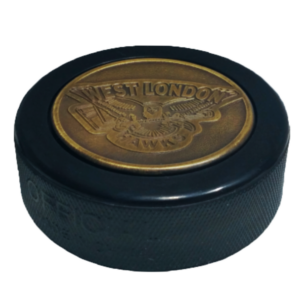
Custom Medallion Hockey Pucks
This product has multiple variants. The options may be chosen on the product page -
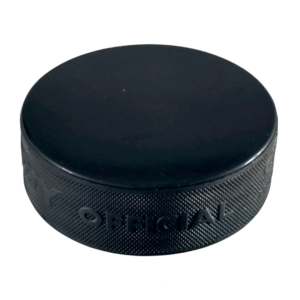
Blank Official Hockey Pucks
This product has multiple variants. The options may be chosen on the product page -
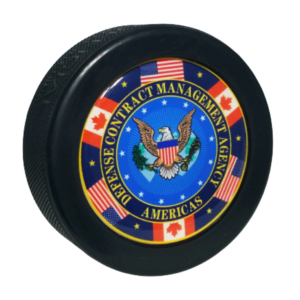
Custom Domed Hockey Pucks
This product has multiple variants. The options may be chosen on the product page